







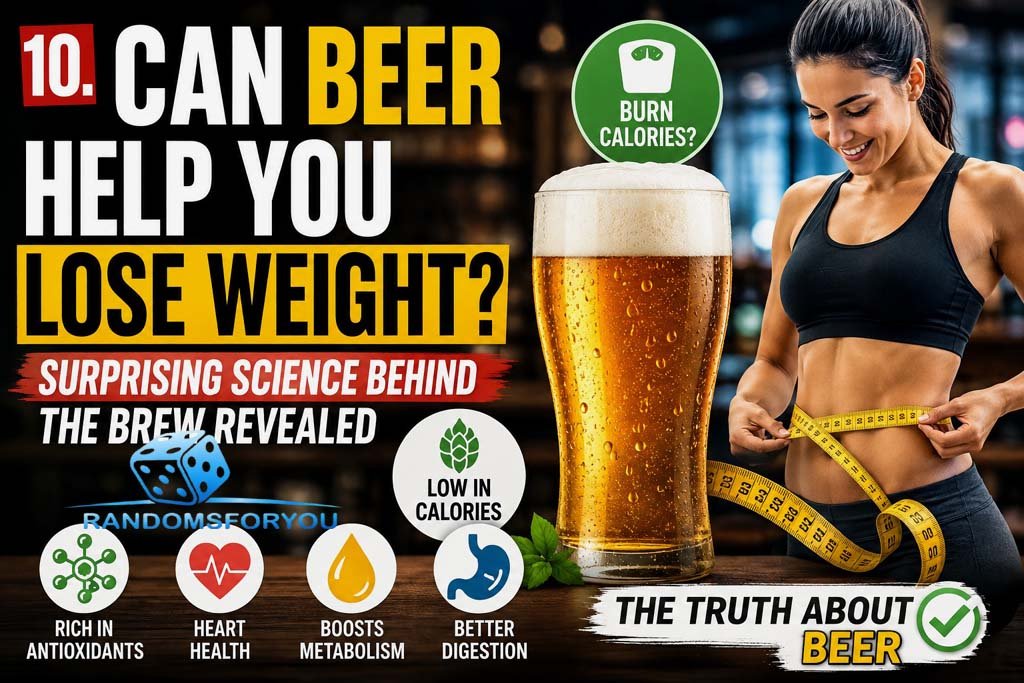
Can Beer Actually Help You Lose Weight? The Surprising Science Behind the Brew
Introduction
When people think about weight loss, beer is usually the first thing they’re told to cut out. The “beer belly” is practically a cultural cliché—the image of a man with a protruding gut, beer in hand, is hard to shake . But what if everything you thought about beer and weight gain was wrong?
Recent scientific research has uncovered some surprising findings about beer’s potential role in weight management. While no one is suggesting you start chugging pints for fitness, emerging evidence suggests that certain compounds in beer might actually help with fat loss. Let’s explore the science behind this controversial claim.

The Myth of the Beer Belly

First, let’s address the elephant in the room—or rather, the belly. According to food science experts, the “beer belly” is largely a myth when it comes to beer specifically targeting your midsection . As University of California Davis professor Charles Bamforth explains: “The beer belly is a complete myth. The majority of calories in any alcoholic drink are provided by its alcohol content. The alcohol in beer has no unique properties; it is the same type of alcohol present in other beverages.
Alcohol doesn’t have special access to abdominal fat. Extra calories from any source—whether from beer, wine, or food—can contribute to weight gain. The reason beer is often associated with belly fat may be simply because people tend to drink it in larger quantities. A standard beer serving is 12 ounces, while wine is typically 5 ounces and spirits 1.5 ounces .

The Hop Compound Connection

Here’s where things get interesting. Scientists have been studying compounds called isohumulones, or iso-α-acids—the major bitter components in beer that come from hops .
Research has shown that these compounds may help reduce body fat. In one study, obese individuals with pre-diabetes who consumed these hop compounds experienced reductions in body fat and hyperglycemia . The compounds also prevented diet-induced obesity in mouse studies .
However, there’s a catch: iso-α-acids are extremely bitter, making them unpalatable at effective concentrations. Fortunately, when beer is stored for long periods, these compounds break down into matured hop bitter acids (MHBA), which are less bitter but may offer similar benefits .

What the Latest Research Shows

A 2025 systematic review and meta-analysis examined 16 studies on moderate beer consumption and nutritional status. The findings? Moderate beer consumption was linked to dietary habits similar in quality to those of non-drinkers. This suggests that moderate beer consumption may not necessarily lead to poorer dietary habits.
However, researchers caution that most studies classified moderate consumption using outdated, higher limits than current guidelines recommend . The evidence remains limited and inconsistent, making firm conclusions difficult .
Non-Alcoholic Beer: A Different Story
Interestingly, non-alcoholic beers tell a different tale. Research published in 2025 showed that the metabolic effects of non-alcoholic beer vary depending on the specific variety consumed. Mixed beers and wheat beers increased fasting glucose and triglycerides, while pilsener styles were more favorable metabolically, similar to water .
The metabolic changes appeared to come from the caloric and sugar content rather than polyphenols . This is crucial: non-alcoholic beer still contains calories and sugar that can affect your weight.

The Calorie Reality
Let’s be honest about the numbers. On average, a standard 12-ounce beer contains approximately 150 calories. Each 5-ounce pour of wine typically contains about 100 calories. Light beers can drop to around 100 calories per can .
The real problem for weight loss isn’t the beer itself—it’s what happens when you drink it. Alcohol can slow your metabolism, impair judgment leading to poor food choices, and stimulate appetite . Those late-night pizza cravings after a few beers aren’t imaginary—they’re biological.
What This Means for You

If you’re trying to lose weight, here’s the bottom line:
Moderation matters: Drinking less frequently and in smaller amounts reduces overall calorie intake .
Choose wisely: Light beers and pilsener styles may be better options than heavier, sweeter beers .
Plan wisely: When you know you’ll be having alcoholic drinks, adjust your food choices for the day and remain physically active to manage the extra calorie intake.
Keep yourself hydrated by alternating every alcoholic drink with water, which can also help limit your overall alcohol intake.
Conclusion
The idea that beer can help you lose weight is more nuanced than the headline suggests. While certain hop compounds show promise for fat reduction, the evidence is still emerging. Meanwhile, the calories from beer—and alcohol’s effects on metabolism and appetite—remain real concerns for anyone watching their weight.
The most honest answer? Beer alone won’t make you lose weight, and it certainly won’t target belly fat specifically. That said, moderate alcohol consumption can still fit into a healthy diet and active lifestyle without necessarily preventing weight loss. As with most things in nutrition, the dose makes the poison—and moderation is key.
About the Author
My name is Dua Qamar, and I am a content writer passionate about exploring the intersection of nutrition, health, and lifestyle.
Why I Wrote This Article
I wrote this piece because the relationship between beer and weight is one of the most misunderstood topics in nutrition. The “beer belly” stereotype has persisted for decades, but emerging science suggests the story is more complex. I wanted to cut through the myths and present a balanced, evidence-based view.
How I Approached This Topic
My research involved examining peer-reviewed studies, systematic reviews, and expert analysis from respected sources including nutrition journals and medical institutions. I focused on presenting findings accurately while acknowledging the limitations of current research.
Who This Article Is For
This article is for curious readers who enjoy challenging assumptions and exploring the science behind everyday beliefs. Whether you’re a beer enthusiast, someone on a weight loss journey, or simply interested in nutrition science, there’s something here for you.
The Message I Hope Readers Take Away
Science is rarely simple, and the truth about beer and weight is no exception. Rather than relying on stereotypes, informed choices based on evidence lead to better outcomes. Moderation, context, and overall lifestyle matter more than any single food or drink.
Written by: Dua Qamar


