







What Your Signature Reveals About You: The Hidden Psychology Behind Your Autograph
Introduction
Think about your signature for a moment. It is one of the few things you write almost daily without thinking. Whether it’s a receipt, a contract, a credit card slip, or an important document, you write your signature almost automatically.
But here is a fascinating possibility: your signature might be revealing more about you than you realize. According to graphologists—professionals who study handwriting in relation to personality—your autograph is a window into how you present yourself to the world .
The richest information about different emotional states and thinking styles is carried by a person’s signature. It is considered one of the most effective and reliable indicators for predicting personality traits, revealing everything from fears and honesty to social skills and work habits .

Why Your Signature Matters
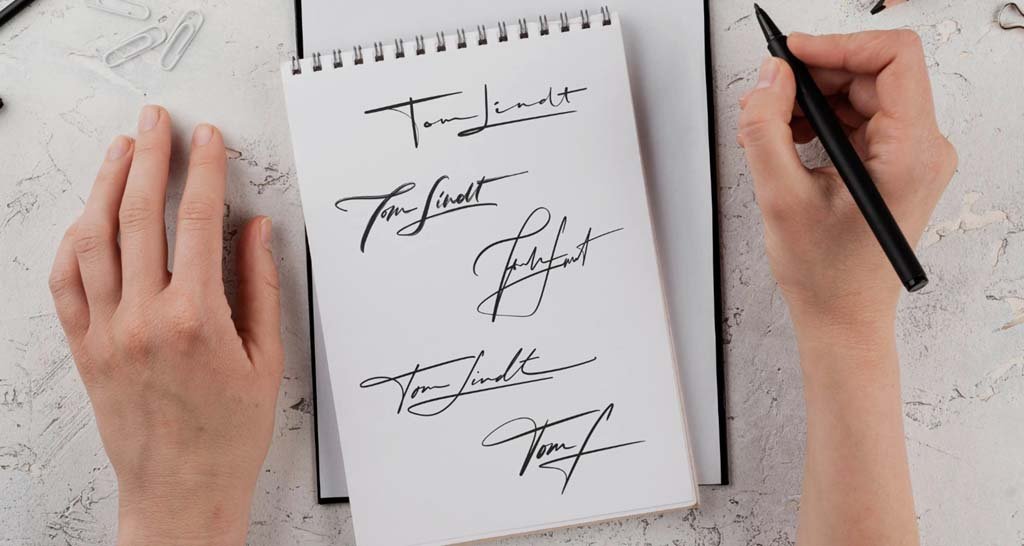
Unlike our everyday handwriting, which we often consciously try to improve, our signature develops more naturally. We rarely practice it or think about how it looks. This makes it an unconscious self-expression .
According to graphologists, your signature represents your public “persona”—the image you want to project to the outside world. It is not necessarily who you truly are underneath, but rather who you want others to think you are . This is why signatures often look completely different from a person’s regular handwriting. One is the real person; the other is the image they want to portray.
One graphologist put it this way: “If a person’s signature is much larger than their writing, then the person is going to assume a higher social profile or need for attention when they’re in public. Many people see them as confident and dynamic, but in reality they are often quieter than they appear.
What Different Signatures Reveal
Size and Legibility

A large signature often indicates ambition and a desire for attention. The writer wants to be noticed and makes an impression . On the other hand, a small signature suggests someone who presents a more modest exterior, though an attention-seeking personality may be hidden beneath this modest appearance.
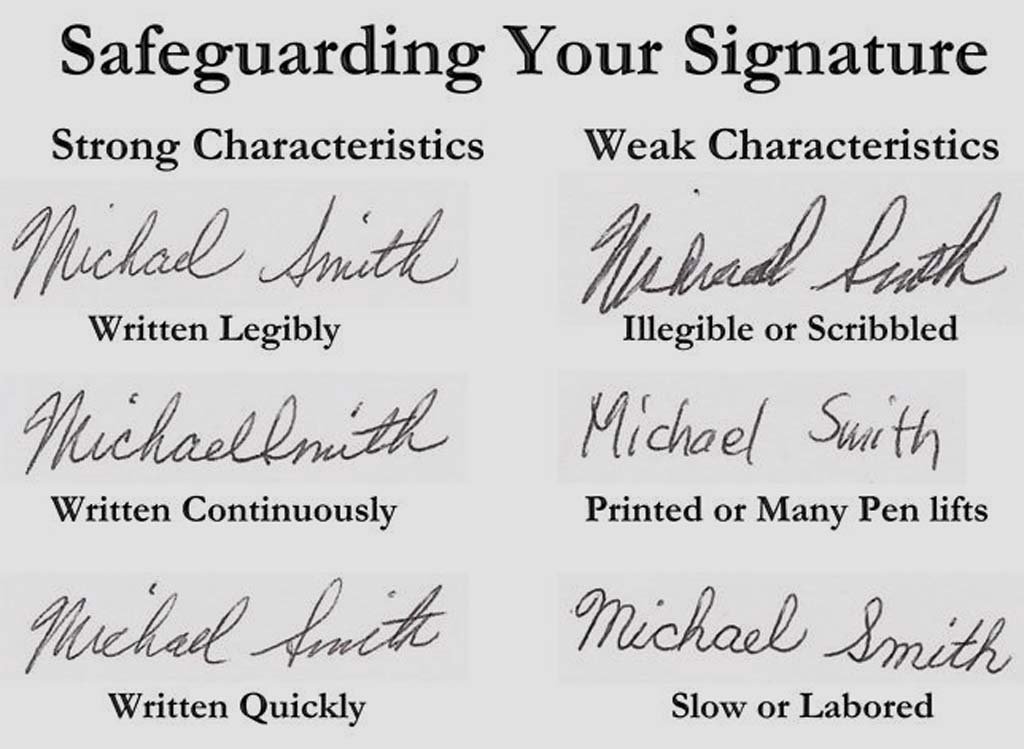
A clearly legible signature indicates someone who is socially open and honest about who they are. They reveal their authentic personality instead of putting on an act. In contrast, an illegible signature suggests someone secretive who likes keeping others guessing about their true nature. Interestingly, people with illegible signatures can talk for hours without actually revealing anything personal .

Slant and Direction
A signature slanting to the right suggests someone who is sociable and easy to get along with. They can make contact and connections with others effortlessly . Conversely, a leftward slant indicates reserve and a need for privacy. The person is polite but keeps others at arm’s length.
The direction of your signature also matters. A signature moving upward suggests an optimist . A signature sloping downward indicates a more pessimistic nature. An even, level signature points to a well-balanced person.
Decorations and Embellishments
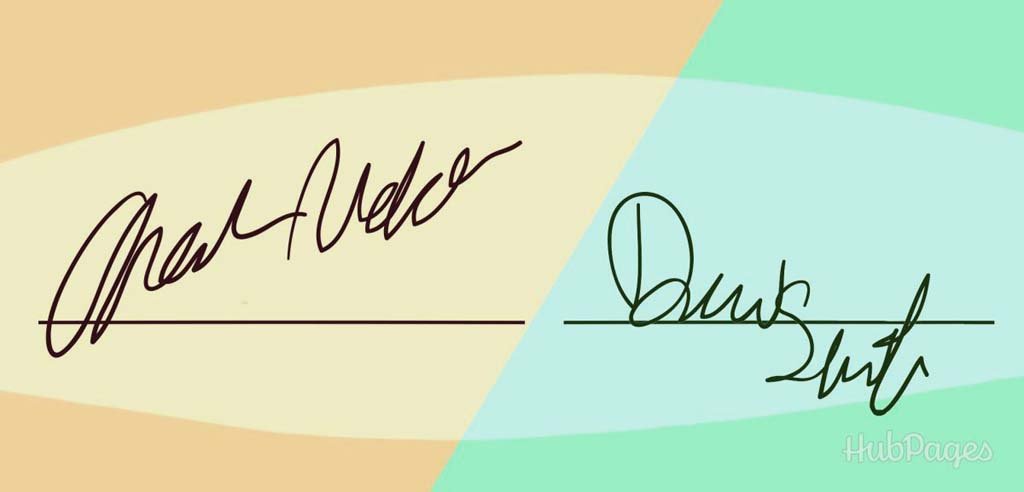
If your signature features loops, flourishes, or flashy movements, graphologists suggest this may indicate a need to appear special. People who add elaborate embellishments are often very talkative but may lack substance. They want to be seen as more important or special than they truly are .
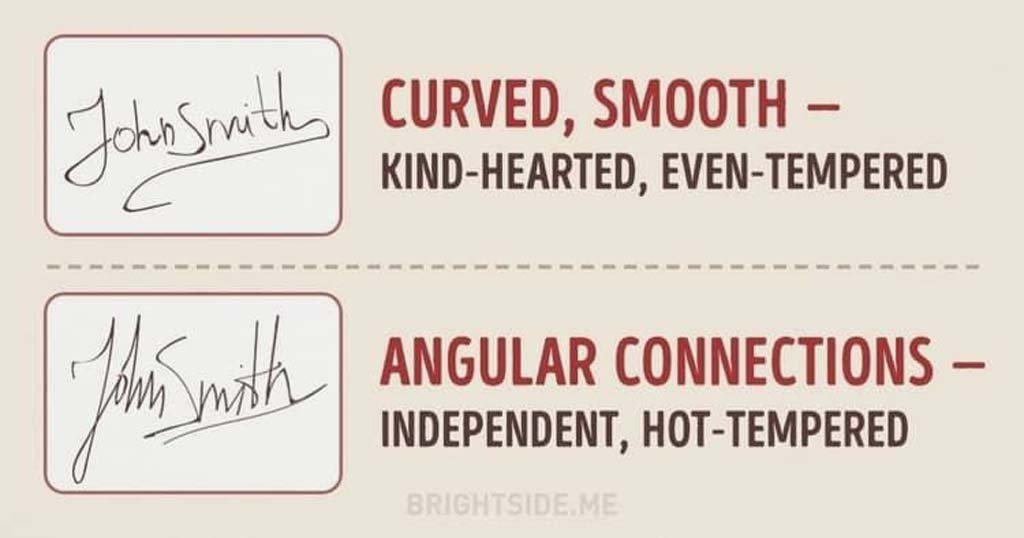

Style: Curved vs. Angular
A rounded or curved signature suggests someone who enjoys getting along with others and avoids conflict. This person wants harmony in relationships. A spiky or angular signature, however, indicates someone who can be critical and potentially aggressive. This is someone who would be difficult to work with, as they are not concerned about upsetting others .
The Thready Signature
Some signatures look almost like a straight line with no readable letters. Graphologists call this a “thready” signature, and it is a warning sign. People with this signature can be evasive, manipulative, and difficult to pin down. They are skilled at diplomacy and can be very good at disappearing when trouble begins .

Underscores and Dots
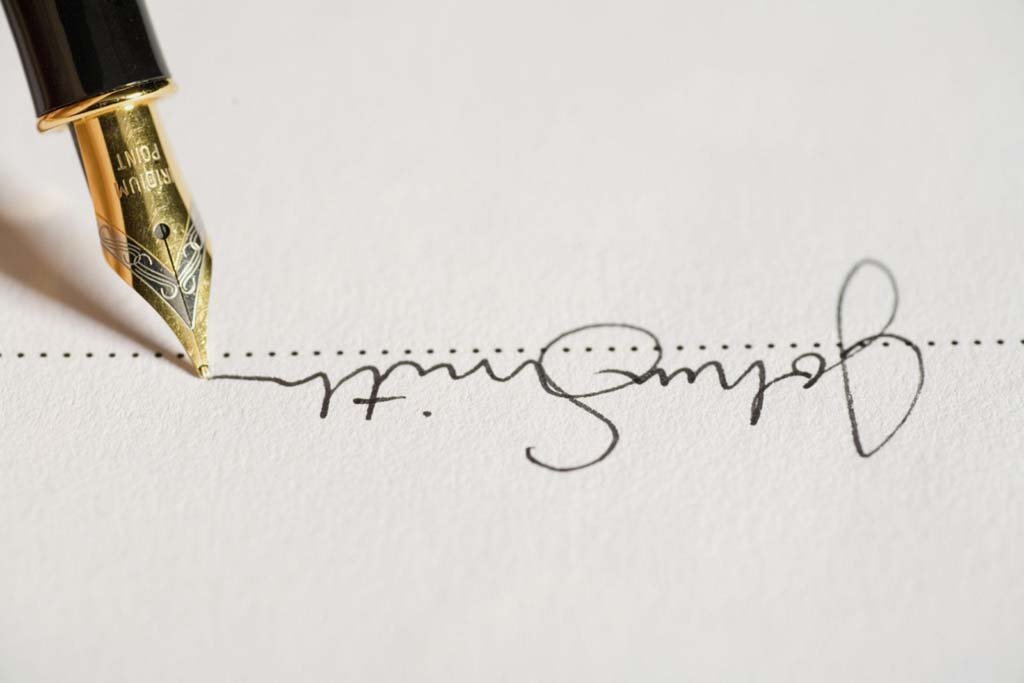
What about those little extras? An underscore below a signature suggests a need for attention or reinforcement. A double underscore indicates even stronger feelings of insecurity or the need to assert oneself. A dot placed intentionally can indicate that the writer finishes what they start and pays attention to details .
The Signature as a Self-Reflection
As one expert from the 1920s observed, signatures are “unconscious betrayals of ourselves.” Unlike our tone of voice, mannerisms, or conversation—which we consciously cultivate and control—our signature is written without being on guard. It never occurs to us that a signature in any way betrays us or reveals what we would rather keep secret .
This is why signatures may be even more revealing than our everyday handwriting. When we write normally, we may try to be neat or legible. But with signatures, we rarely give them a second thought.
Some graphologists also note that a signature can reflect different aspects of personality. For example, one study found that the first and last names in a signature can indicate different psychological meanings, with the first name often representing the private self and the last name representing the public or family self . Space between the first and last name has even been linked to relationships with family members .
Conclusion
Of course, graphology is not an exact science. Many experts dismiss it as pseudoscience, noting that it has not been proven to be more reliable than chance . Still, the thought that a signature could offer clues about a person’s character remains highly intriguing.
Whether you believe in graphology or not, one thing is certain: your signature is uniquely yours. It has evolved over time, shaped by your experiences, your ambitions, and your sense of self. The next time you sign your name, take a moment to look at it—and consider what it might reveal about the person you have become.
About the Author
My name is Dua Qamar, and I am a content writer fascinated by the hidden messages we leave behind in everyday actions.
Why I Wrote This Article
I wrote this piece because signatures are something we all use but rarely think about. The idea that this simple act could reveal personality traits is both intriguing and thought-provoking. I wanted to explore this topic for curious readers who enjoy discovering surprising facts and hidden meanings in ordinary things.
How I Approached This Topic
My research involved examining graphology studies, expert analyses, and historical perspectives on signature analysis. I consulted sources including graphology society founders , academic papers on signature analysis for personality prediction , and 1920s reflections on the psychology of signatures .
Who This Article Is For
This article is for anyone who has ever wondered about the deeper meaning behind human behavior—especially the things we do without thinking.
The Message I Hope Readers Take Away
Understanding ourselves and others is a lifelong journey. Sometimes, the smallest clues—like how we sign our name—can offer glimpses into who we really are.
Written by: Dua Qamar


