








How Much Does YouTube Really Pay for 1,000 Views?
Introduction
Every single day, countless individuals upload videos to YouTube, dreaming of transforming their creative pursuits into sustainable income. Among the most frequently asked questions in the creator community is a seemingly simple one: what is YouTube’s actual payout rate per 1,000 views? The answer, however, is far from straightforward—there’s no universal rate card. Instead, earnings fluctuate dramatically based on numerous variables including content category, viewer demographics, audience engagement, and advertising formats.


The Quick Overview
Generally speaking, YouTube creators can expect to earn anywhere from $0.50 to $5 for every 1,000 views. Yet this figure only tells part of the story. Creators operating in lucrative niches such as personal finance often command $8–$18 per 1,000 views, whereas entertainment and lifestyle channels frequently see rates hovering between $0.50 and $2.
Decoding CPM and RPM
To truly grasp YouTube monetization, you’ll need to familiarize yourself with two essential metrics:
CPM (Cost Per Mille): This represents what advertisers pay for 1,000 ad impressions—the gross amount before YouTube takes its percentage.
RPM (Revenue Per Mille): This is the actual earnings creators receive per 1,000 views after YouTube deducts its share. This is the number that genuinely matters.
Why RPM Falls Short of CPM
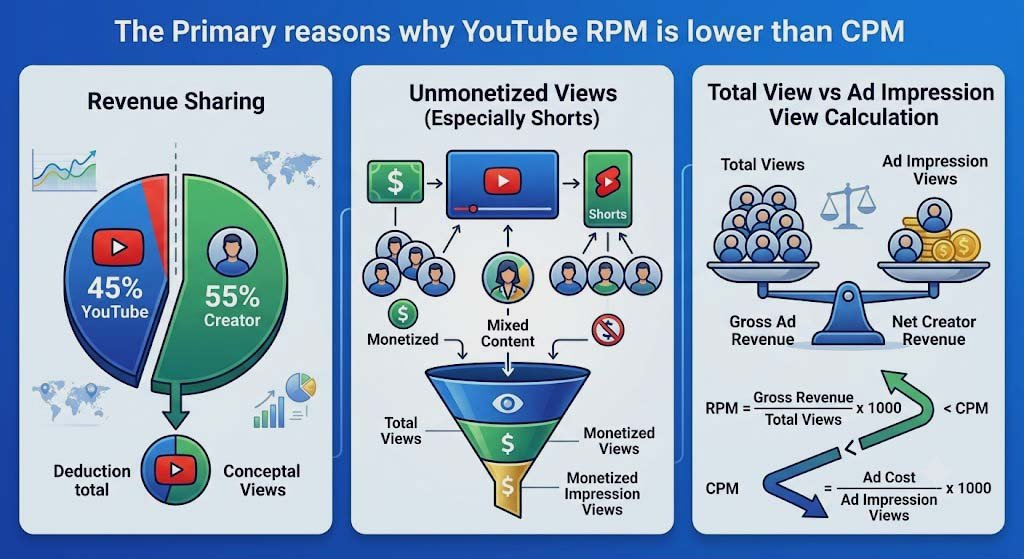
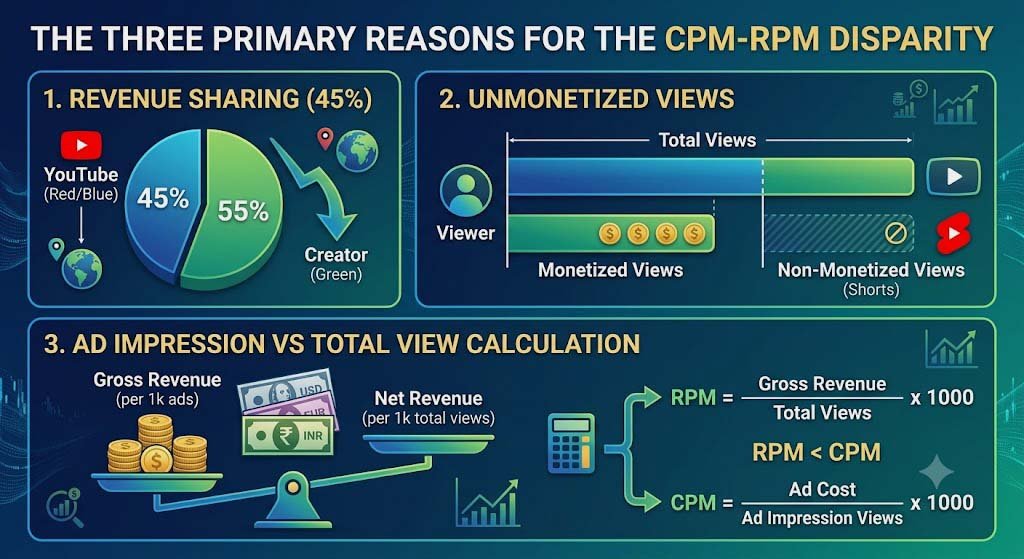
RPM consistently undercuts CPM due to three primary factors:
Revenue sharing: YouTube retains approximately 45% of advertising revenue, leaving creators with the remaining 55%
Unmonetized views: Not every view triggers an ad display, particularly with Shorts content
Total view calculation: RPM factors in all views, not just those that generated ad impressions
To illustrate: if an advertiser pays a $10 CPM, the creator’s actual RPM might settle around $2.75 after YouTube’s cut and accounting for the fact that only a portion of views result in ad delivery.
YouTube Shorts: A Different Ballgame
The platform’s short-form video offering, YouTube Shorts, delivers substantially lower RPMs compared to traditional long-form content. Many creators report Shorts RPMs consistently falling below $0.20, while their long-form videos in the same niche generate $3–$6+.
This considerable disparity stems from several factors:
Shorts monetization operates through a pooled revenue system across all Shorts content
Ad inventory is spread more thinly
Viewer consumption patterns differ significantly
Earnings Breakdown by Content Category
Here’s what creators typically earn per 1,000 views across various niches:
Content Niche Average Earnings Range
Finance and Business $5 – $10
Technology and Gadgets $2 – $4
Education and Tutorials $1 – $4
Entertainment and Vlogs $0.50 – $2
The Geographic Factor
Viewer location plays a pivotal role in determining earnings. Audiences from the United States, United Kingdom, Canada, and Australia command the highest CPMs because advertisers invest more to reach these demographics. A video accumulating 100,000 views from American viewers could generate significantly more revenue than the same video with 100,000 views from Indian audiences, where typical RPMs range from ₹30 to ₹150 (approximately $0.35–$1.75) per 1,000 views.
Prerequisites for Monetization
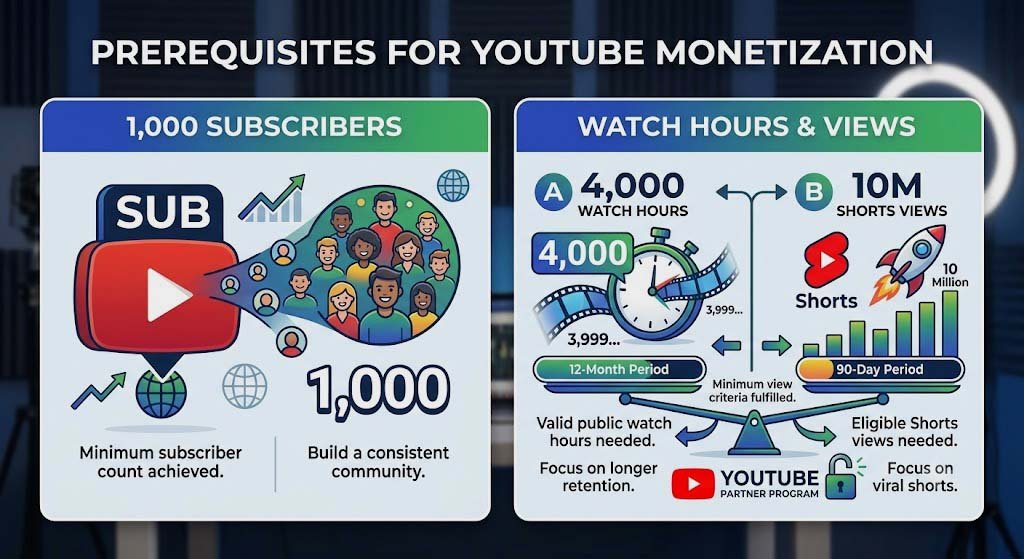
Before earning a single cent, creators must qualify for the YouTube Partner Program (YPP) by meeting these minimum requirements:
1,000 subscribers
Either 4,000 valid public watch hours within the past 12 months, OR 10 million eligible Shorts views within the last 90 days
Final Thoughts
YouTube earnings remain highly unpredictable. A vlogger whose audience primarily resides in India might earn $1 per 1,000 views, while a finance channel attracting American viewers could command $18 for the same number of views. The crucial takeaway? RPM deserves more attention than CPM, and building a loyal following within a high-value niche offers the most dependable path toward consistent YouTube revenue.
About the Author
My name is Dua Qamar, and I’m a content writer dedicated to helping creators navigate the business dimensions of content production.
Why I Wrote This Article:
The question “how much does YouTube pay?” ranks among the most searched inquiries online, yet it remains deeply misunderstood. Aspiring creators often hold unrealistic expectations, and I aimed to deliver a transparent, honest perspective.
How I Approached This Topic:
My research involved analyzing numerous industry benchmarks, YouTube’s official guidelines, and authentic creator data to present a balanced snapshot of YouTube earnings for 2025–2026.
Who This Article Is For:
This piece targets aspiring YouTubers, content creators, and anyone curious about the economics behind video monetization.
The Message I Hope Readers Take Away:
YouTube can certainly serve as a viable income stream, but success hinges on strategic choices, niche selection, and audience cultivation—not simply accumulating views. Understanding the metrics that truly drive earnings will position you more favorably for long-term success.
Written by: Dua Qamar


