


America’s Richest Families In 2015
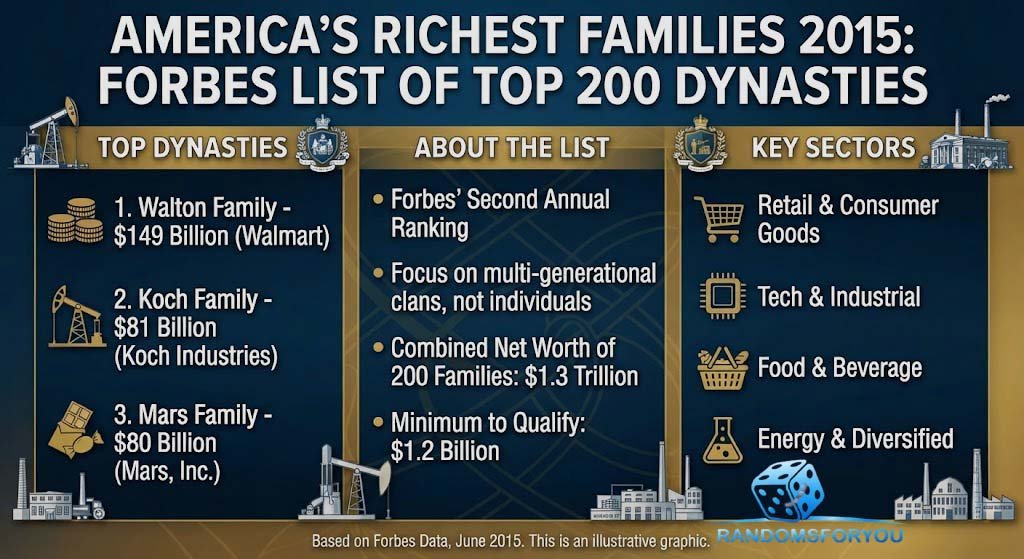
When we think of American wealth, individual billionaires like Bill Gates and Warren Buffett often come to mind. But in 2015, Forbes released its second annual ranking of America’s richest families, offering a different perspective on wealth—one built across generations. Unlike the Forbes 400, which focuses on individuals, this list captured the combined fortunes of multi-generational clans, from small groups of siblings to sprawling dynasties with thousands of members.
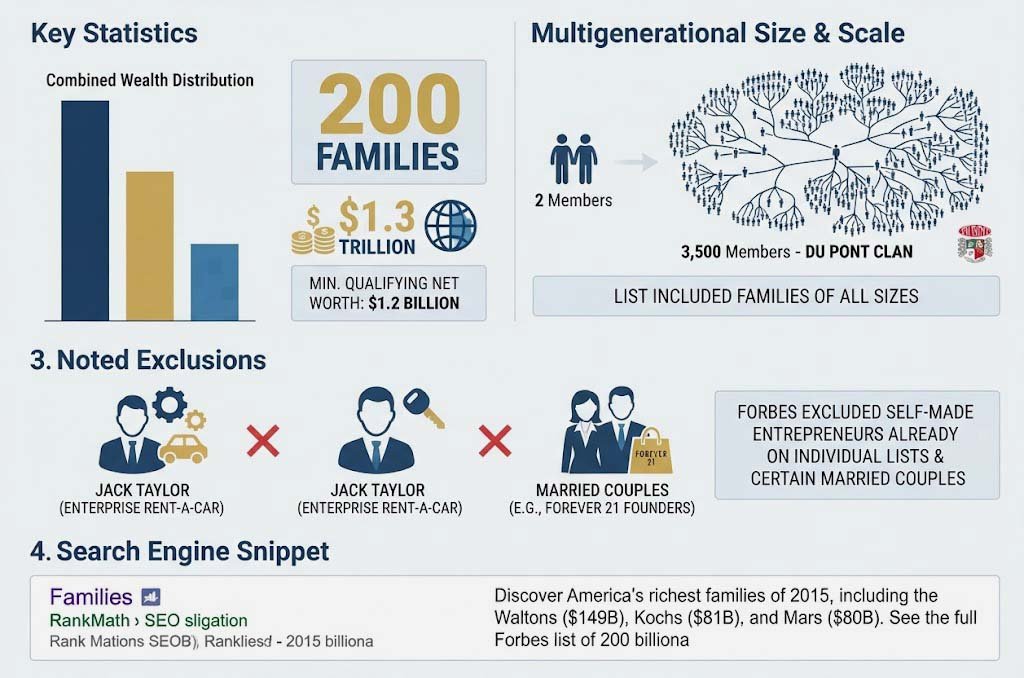
Together, the 200 families on the list were worth a staggering $1.3 trillion**, and you needed a combined net worth of at least **$1.2 billion just to qualify.
The Top of the List: Dynasties That Built America
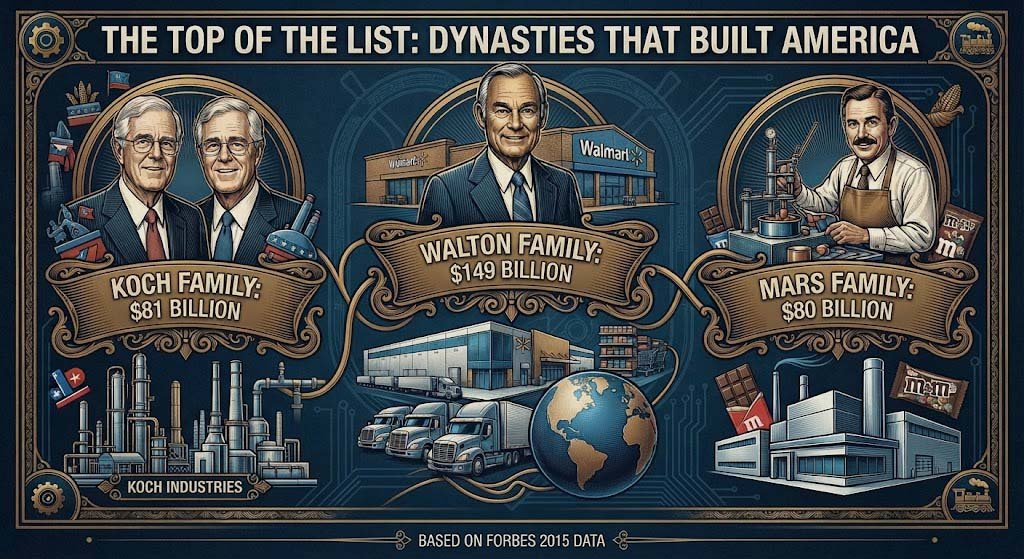
For the second year running, the Walton family held the top spot with an estimated fortune of **$149 billion**. Six heirs of Walmart founders Sam Walton and James “Bud” Walton together owned about 54% of the global retail giant. While this was down from $152 billion the previous year due to a dip in Walmart’s stock price, their position at the top remained unchallenged.
Following the Waltons were the Koch family, valued at an estimated $81 billion. Brothers Charles and David Koch ran Koch Industries, the second-largest private company in the U.S., and were also well-known for their political activism.
Rounding out the top three was the Mars family, with a combined fortune of $80 billion. Frank Mars started selling candy from his kitchen in Tacoma, Washington, in 1911, and today his descendants own the world’s largest candy company, maker of M&Ms, Milky Way, and countless other household favourites.
The Notable Names: Food, Drink, and Everyday Brands
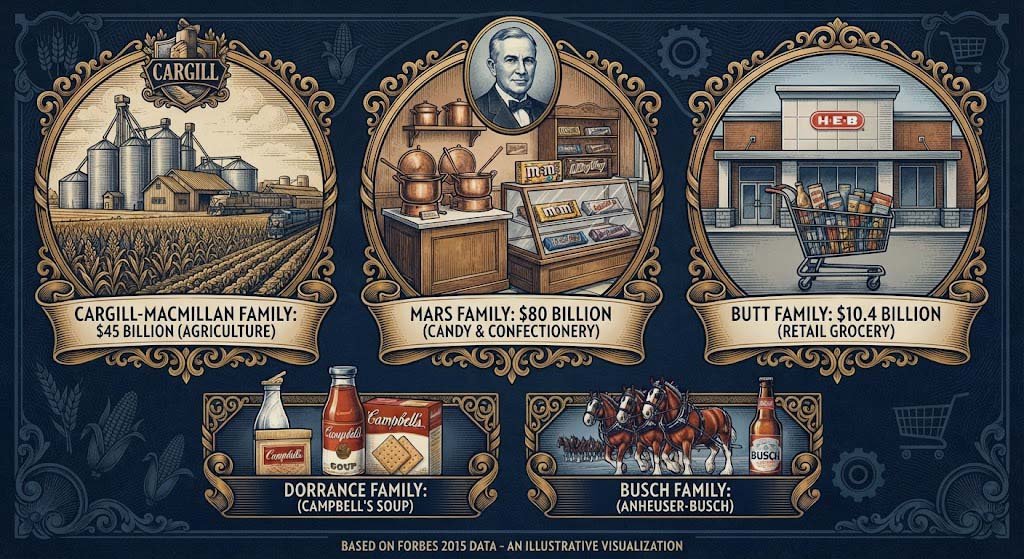
The Forbes list was a who’s who of American commerce, and the food and retail sector was particularly well-represented. The Cargill-MacMillan family—descendants of the founder of agricultural giant Cargill—ranked fourth with $45 billion. The Dorrance family (Campbell’s Soup) and the Busch family (Anheuser-Busch) also featured prominently.
Beyond the top ranks, families behind everyday brands made the cut. The Butt family (H-E-B supermarkets) was valued at $10.4 billion, while the **Jenkins family** (Publix Super Markets) was worth $6.8 billion. The Demoulas family (Market Basket) and the Tyson family (Tyson Foods) both had fortunes of $3.3 billion.
A Closer Look at the Numbers and Exclusions
The list included multigenerational families of all sizes, from just two brothers to the 3,500 members of the Du Pont clan (valued at $14.5 billion). However, Forbes excluded self-made entrepreneurs who had already appeared on its individual billionaire lists, such as Jack Taylor of Enterprise Rent-A-Car and married couples like the founders of Forever 21.
A Year of Inequality and Change
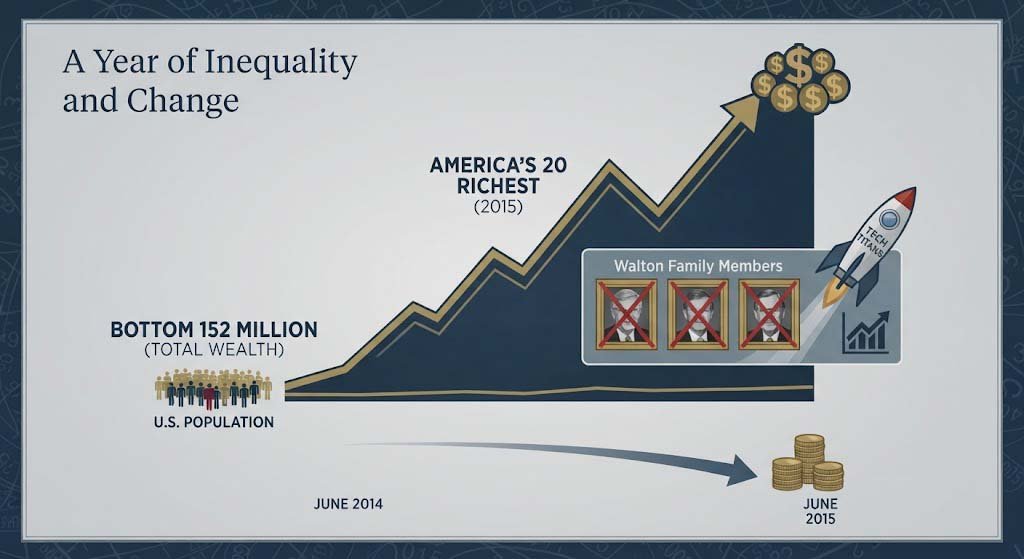
The Forbes ranking coincided with a period of intense focus on wealth inequality in America. In 2015, the Institute for Policy Studies reported that America’s 20 richest people—a group that included several members of the Walton and Koch families—had more wealth than the entire bottom half of the U.S. population, some 152 million people.
At the same time, there were notable shifts. Three Walton family members were knocked out of the top 10 of the individual Forbes 400 list in 2015, displaced by rising tech titans like Jeff Bezos and Mark Zuckerberg. As of June 2015, Forbes calculated that the combined fortunes of the 200 richest families had dipped slightly from the previous year, but the sheer scale of their wealth remained a defining feature of the American economic landscape.
About the Author
My name is Dua Qamar, and I am a content writer with a deep interest in the histories of family businesses and the forces that shape economic power. I believe that understanding the legacy of wealth provides crucial insight into the industries and brands that surround us.
Why I Wrote This Article:
I wrote this piece because a Forbes list from 2015 is more than just a ranking—it is a snapshot of American capitalism at a specific moment. It tells the story of how family fortunes were built and how they endured across generations, often through well-known brands we still encounter every day.
How I Approached This Topic:
My research drew on Forbes’ comprehensive 2015 ranking of America’s richest families and supplementary reports that provided deeper context on the numbers and the families involved. I also considered broader analyses of wealth inequality to frame the significance of these vast fortunes.
Who This Article Is For:
This article is for anyone curious about the families behind the brands, the history of American business, or the dynamics of intergenerational wealth.
The Message I Hope Readers Take Away:
America’s richest families are not a monolith—they are the heirs of founders who built empires in retail, candy, agriculture, and supermarkets. Their fortunes, measured in the hundreds of billions, reflect a nation shaped by entrepreneurship and the enduring power of family-controlled capital.
Written by: Dua Qamar
